
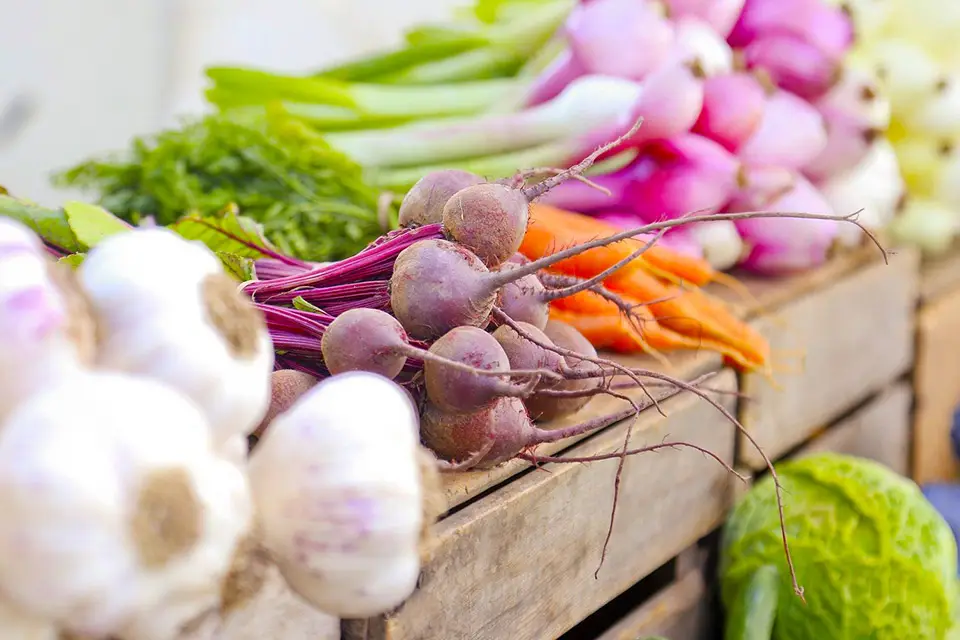
Walk into any major grocery store in January and you will find strawberries. They have likely travelled several thousand kilometres to reach the shelf, picked before they were ripe so they could survive the journey, and held in cold storage long enough that whatever sweetness they were heading toward never quite arrived. None of this is advertised, and potentially hidden to the buyer.
This is the quiet trade-off at the centre of our modern food system. Convenience and consistency have become so expected that most of us have forgotten they come at a cost, and that cost is paid in taste, nutrition, and connection to the food itself.
What Seasonality Actually Means
Seasonal eating simply means consuming food when it is naturally ready to be harvested in your region. For most of human history, this was not a philosophy or a lifestyle choice. It was just reality. The asparagus came up in spring, the tomatoes ripened in late summer, the squash carried you through the fall. People built their meals around what was available because nothing else was available.
That reality has been almost entirely obscured by the industrial food supply chain, which moves produce across hemispheres and uses controlled-atmosphere storage to make July's peaches available in December. Although this system is impressive and has led to improving the nutrition of people across the globe, it provides a fundamentally different product than what you would find at a local farm stand in August, and most shoppers have never been given the opportunity to compare the two.
The Taste Difference Is Real
The flavour gap between a field-ripened tomato and a long-haul grocery store tomato is not a matter of preference or nostalgia: it's in its chemistry. Fruits and vegetables develop their sugars, acids, and aromatic compounds in the final stages of ripening, and that process requires time on the plant. A tomato harvested green and ripened in transit or storage simply does not go through the same biological process as one left on the vine until it is genuinely ready.
The same principle applies across virtually every fruit and vegetable category. Corn begins converting its sugars to starch within hours of harvest, which is why an ear picked that morning from a farm near you is a fundamentally different food than one that has been in a refrigerated truck for four days. Berries, peaches, melons, peas, and leafy greens all follow similar logic. Local and seasonal is not a marketing claim. It is the actual condition under which these foods taste the way they are supposed to taste.
Nutrition Follows the Same Path
Flavour and nutrition tend to be linked in many ways, which has historically been a benefit of evaluation. Humans crave the flavour that is inherently linked to the underlying nutrition. Many of the vitamins and antioxidants in fresh produce are at their highest concentration at the point of peak ripeness and begin to degrade from there. A study out of the University of California found that spinach can lose a significant portion of its folate within a week of harvest under refrigeration. Vitamin C content in many vegetables drops measurably during extended storage, even under ideal conditions.
This does not mean that grocery store produce is without nutritional value. It means that fresh, local, and in-season produce is at its most nutrient-dense, and that the window between harvest and your plate matters more than most people realize. When a farm near you picks something this morning and sells it at market this afternoon, you are getting the food at its nutritional peak. That is simply not possible when the same food has spent two weeks in transit and cold storage.
The Constraint Is Part of the Deal
The downside of this behaviour is in its constraint: shopping seasonally requires adjustment. You will not find Ontario strawberries in January, because they do not grow here in January. You will not find local corn in April, or butternut squash in June. The variety available from local farms shifts with the calendar in ways that a grocery store never does, and that takes some getting used to.
For shoppers accustomed to year-round access to everything, this can feel like a limitation at first. And in a narrow sense, it is one. But most people who make the shift find that the constraint comes with a different kind of reward. You start to genuinely look forward to things. The harvest timing gives the year a rhythm that felt absent when every trip to the grocery store looked the same regardless of season. And worth considering, is it is not an all-or-nothing strategy, as incorporating seasonality and locality into your shopping can be a small or large adjustment, depending on your needs.
It also changes how you cook. Seasonal cooking is, by nature, ingredient-led. You build around what is good right now rather than what a recipe calls for, and that practice tends to make people more confident and more creative in the kitchen over time.
How to Get Started
The most practical entry point is simply to start paying attention to what local farms in your region are offering and when. Local Food Canada's directory lists farms and producers across the country, many of whom sell directly to consumers through farm stands, CSA boxes, or farmers' markets. Browsing local listings by region gives you a real-time picture of what is actually growing near you right now, which is a more honest food education than any grocery store shelf can provide.
You do not have to overhaul your entire shopping routine at once. Start with one or two categories where the seasonal difference is hardest to ignore. Tomatoes in August. Asparagus in May. Corn in late summer. Let the taste do the work of convincing you, because it will.
The strawberries in January will always be there if you want them. But once you have had the real thing, it becomes harder to pretend the January version is the same fruit.
Written by Jaret Fattori