
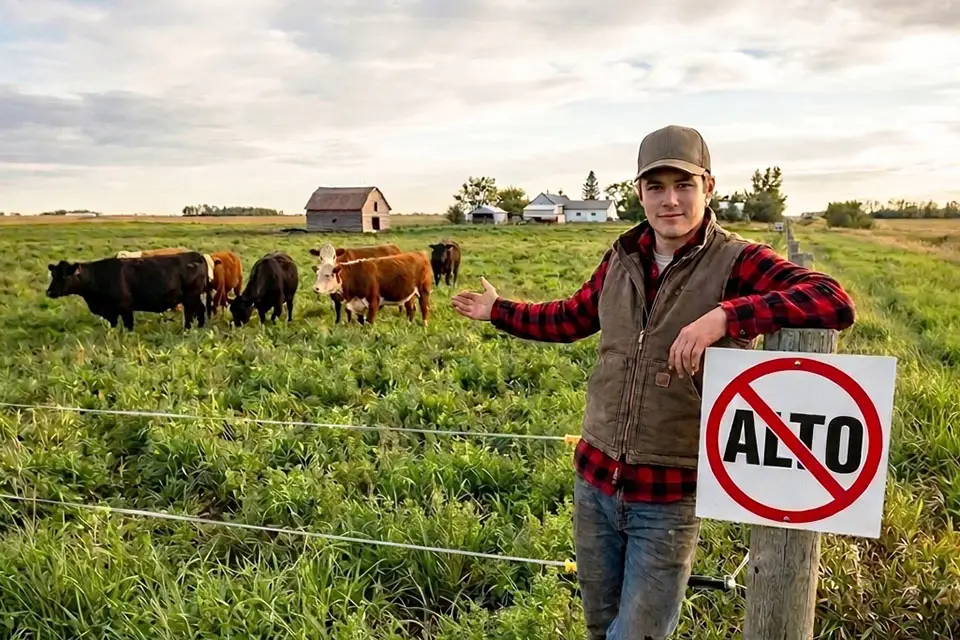
When we think about building strong and resilient local food systems, the focus is typically placed on improving the accessibility of local farmers' markets and small farms, as well as spreading the word of the many benefits of locally grown food. What often gets taken for granted is the very land required to grow the local food we enjoy.
We are fortunate in Canada to have vast swaths of beautiful agricultural land with rich healthy soils. While land affordability is a known barrier to farmers just starting out, large infrastructure projects can seemingly arise out of nowhere and affect both established and new farmers, as well as the entire local food community.
The proposed 1,000-kilometre ALTO high-speed rail line planned to connect Toronto and Quebec City aims to make travel between Canada's largest urban centres faster and greener, and these projects bring a complex mix of challenges and potential opportunities.
Carving Up Prime Agricultural Land andThe Hidden Costs to Local Food Networks
Beyond the immediate physical implications, infrastructure developments can create broader ripples across regional food systems:
- Land Access and Succession: The prospect of land expropriation creates uncertainty for farm families planning for the future. Young and first-generation farmers already face steep financial hurdles when trying to access affordable land; when acquisition zones freeze property transfers or alter land values, entering the industry becomes even more challenging.
- Operational Disruption: From milk pickup routes to local equipment suppliers, rural supply networks rely on seamless access across township roads. Construction delays, detour routes, and restricted farm access points can interrupt time-sensitive harvest schedules and fresh food distribution.
- Loss of Prime Soil: In regions across Eastern Ontario and Quebec's St. Lawrence valley, the footprint of mega-infrastructure projects frequently intersects with some of Canada's most fertile agricultural soils - irreplaceable farmland that sustains local communities.
One of the primary concerns for small producers is land fragmentation, loss of one's own land, and the potential for governmental land seizure. High-speed rail lines, similar to major highway expansions, require dedicated, uninterrupted corridors of land. When a line cuts directly through a farming community, it doesn't just reduce total acreage - it can split a cohesive farm right down the middle. Large number of land owners voicing their concerns may be heard, but the Canadian government does reserve the right to expropriate land for projects like the ALTO train.
For small-scale operators who rely on moving machinery between fields, or who manage rotational livestock grazing, a severed parcel of land makes daily operations complex. Without frequent, farm-friendly level crossings, simple tasks like hauling feed, moving equipment, or transporting fresh produce to market can turn into lengthy detours down rural roads to the nearest crossing or under/overpass.
Underpinning many of these physical disruptions is the heavy emotional and financial weight of potential land expropriation. While project planners typically aim to secure property through voluntary purchase agreements, the reality of major infrastructure developments is that if negotiations stall, governments can exercise legal expropriation powers to acquire the necessary right-of-way. For small-scale producers, a forced land sale is far more than a simple real estate transaction - it strikes at the heart of farm continuity and generational stewardship. The lingering threat of expropriation creates deep uncertainty, often freezing long-term investments in soil health, farm upgrades, or farm expansion while farm families navigate stressful, complex processes to defend the land they rely on for their livelihoods. It can also breed mistrust and anger towards a government that already seems to treat small-scale farming like an afterthought.
It's Not All Doom and Gloom
While concerns around farmland preservation take center stage, and are extremely important to consider, large-scale transit projects can also offer potential long-term advantages for rural regions if designed with local communities in mind:
- A Boost to Agritourism: Better connectivity between major urban centres like Toronto, Ottawa, and Montreal makes rural getaways far more accessible for city dwellers. With efficient transit options bringing consumers closer to agricultural regions, small farms offering U-pick orchards, artisanal cheese tastings, farm-to-table dining, or weekend farm stays could see an increase in direct-to-consumer agritourism.
- Easier Roadways for Local Transport: Shifting thousands of daily commuters and travelers off busy highways like the 401 and onto electric rail lines can ease highway congestion. Clearer highways and regional arterial roads make it safer and faster for local farmers to haul livestock, deliver fresh produce to urban distribution hubs, and move farm machinery.
- Long-Term Environmental Alignment: Sustainable agriculture and low-carbon public transit do ultimately share a common goal: reducing environmental footprints. Modernizing transit infrastructure helps curb regional greenhouse gas emissions, supporting broader climate resilience efforts that directly benefit soil health and weather predictability for agriculture.
Building Connections Without Losing Ground
Sustainable transportation is an important goal for growing regions, but long-term sustainability also relies on safeguarding the people who produce our local food. As planning for projects like the ALTO high-speed train continues, farm organizations across Ontario and Quebec are emphasizing the need for transparent consultation, environmental assessments, and design choices that minimize disruptions to farmland.
Whether you are a seasoned locavore or simply someone who enjoys eating fresh, locally grown food, staying informed about rural land-use planning is a meaningful way to support Canadian agriculture. Protecting local food means caring for the soil it is grown in, the farm families who tend it, and finding ways for infrastructure to support rural livelihoods rather than compromise them.
To hear directly from local producers affected by these proposed routes, you may watch and read the following articles:
- Farmers Forum:5,500 farms could be affected by high-speed train from Quebec to Toronto - Details estimates regarding the number of agricultural properties potentially impacted along the proposed 1,000-kilometre corridor.
- Ontario Farmland Trust:High-Speed Rail's Public Consultation: Have your say and help ensure farmland is protected - Discusses the economic viability of small farms facing land division and highlights the public consultation process.
- Ontario Federation of Agriculture (OFA):Food security, farmland must not be sidelined by high-speed rail project - Outlines official concerns regarding land fragmentation, divided farm parcels, operational inefficiencies, and long-term risks to regional food production.
- Global News:Farmers protest against high-speed train project - Video covering demonstrations by agricultural workers and farmers speaking out against potential land expropriation.
- CTV News: Eastern Ontario Farmers Raise Concerns Over High-Speed Rail Project - Video that provides firsthand perspectives on how corridor plans could affect local farmland, property access, and daily farm operations.