
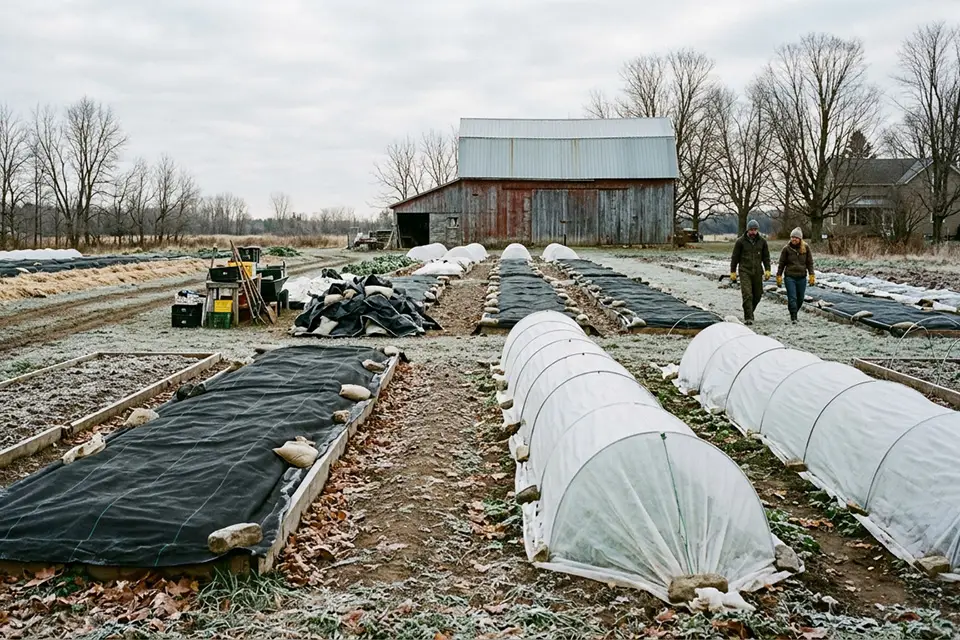
A particular kind of quiet settles over a small farm in late fall. The market tent is packed away, the frost has had its say on the tomatoes, and for the first time in months you can breathe. It's tempting to treat this stretch as the end of the year, but many seasoned growers will tell you it's really the start of the next one.
The choices you make between now and your first seed order shape how next season will feel: how busy, how stressful, and how rewarding. Here are some of the things experienced growers do to wrap up well, keep a little income coming in over the winter, and set themselves up for an easier spring.
If you've been farming for a while, you've probably heard many of these tips before, and you may well have your own better versions of them. A lot of good farm wisdom gets passed from one grower to the next, and we hope at least a few of these ideas help with your fall-to-winter transition, or remind you of something worth adding to the to-do list.
This article includes writings about...
- Finishing the Harvest on Your Terms: Leave frost-hardy crops in the ground, save storage crops for winter, plant garlic and spinach, and sell seconds.
- Storage: Protecting What You've Grown: Cure crops properly, use affordable cooling options, and add a phone-connected sensor to protect stored harvests.
- Setting Up Spring Before the Snow Flies: Tarp beds, choose cover crops with spring in mind, test soil now, and map your fields.
- Tools, Equipment and Taking Stock: Winterize irrigation and engines, schedule repairs in the off-season, and count supplies before ordering more.
- Staying Connected Through the Winter: Holiday products, gift CSA shares, winter boxes and newsletters keep customers engaged and bring in winter income.
- A Friendly Look at the Numbers: A season review shows which crops and markets pay off, without giving up the crops you love.
- Less Paperwork, More Farming: Tidy the books, track deadlines, order seeds early, use templates and software, and apply for grants.
- Your Crew: Invite good workers back early, and write down how you like things done to make training easier.
- Rest Is Part of the Job: Schedule real time off and attend winter conferences to recharge and learn from other growers.
- Looking Ahead: Winter planning makes next season smoother, and it's a good time to update your Local Food Canada listing.
Become a member to read the full article
Some articles are only available to our membership, as well as many other member benefits!